Edge Computing Solutions
SC//Platform: Managing Applications from Beyond the Data Center
The ever-expanding expectations of our digital world demand more applications run outside the cloud or data center, close to where they are used by people, devices, and IoT technologies. But managing the sprawl of complex infrastructure to run applications locally in distributed locations is an escalating burden on IT departments. Attempts to handle these edge computing workloads with tools built for the cloud or traditional data centers result in excess cost, complexity, and fragility that fail to deliver on the promise of edge computing.
With SC//Platform, you can run applications and process data outside centralized data centers, at the edge of your network closest to where that data is created and utilized. Leverage SC//Fleet Manager to centrally monitor and manage hundreds or thousands of distributed edge infrastructure deployments with few or no on-site IT personnel.
The award-winning SC//HyperCore software delivers on-premises edge computing with high availability and disaster recovery to remote locations at an affordable entry-level cost. All SC//Hardware can be deployed quickly, managed locally or remotely, and can self-heal almost instantly. Finally, get all the benefits of affordable edge computing infrastructure without sacrificing reliability, ease of deployment, and ease of use.
Benefits of Edge Computing
The Industry’s Lowest Edge Computing Platform Acquisition and Deployment Cost
Getting Operational with Scale Computing HCI StorageReview
We believe we have the simplest IT infrastructure platform to deploy and manage. Need proof? Watch this "unboxing" video from the team at StorageReview as they put Scale Computing Platform to the test and cover the process from start to finish!
SCALE COMPUTING RECOGNIZED ON THE 2021 CRN EDGE COMPUTING 100 LIST
The second-annual CRN Edge Computing 100 list spotlights the vendors leading the way in providing channel partners with the technology needed to build next-generation, intelligent edge solutions that ultimately bring data collection and processing closer to users. The categories include Edge Hardware, Software and Services; IoT and 5G Edge Services; and Security
Edge Computing Product Features
Gain a comprehensive understanding of how SC//Platform can be tailored to suit the unique demands of various organizations, driving significant improvements in operational resilience and performance. Hear from two customers: Syracuse University and Kingston Police, who despite their different operational contexts, found common ground in their requirements for a modern IT infrastructure that promises not only scalability and reliability but also unparalleled efficiency and simplified management.
Managing Easier Edge Computing Deployments
Are you looking to manage and enable IT applications outside of your central data center? Demand for near-real-time response in critical applications is driving a need to put computing power where it can be best used - at the edge of your network. If you're considering edge computing, then you need to read "The Gorilla Guide to Enabling IT at the Edge."
Delhaize needed a reliable edge computing system in each of its stores to support the many new IoT solutions they were implementing.
HE100 and HE500 Edge Computing Appliances
Scale Computing's HyperCore Edge is built specifically for sites that need highly-available, autonomous infrastructure that can be deployed almost anywhere.
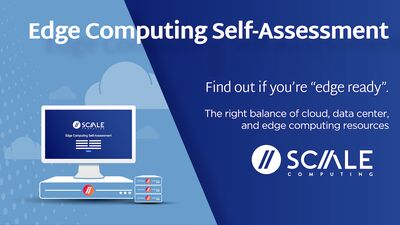
Edge Computing Self-Assessment
We developed this Edge Computing Self-Assessment tool to help you think through the unique needs of your organization. While no assessment provides an exact formula, the personalized data our new tool offers can help you identify and explore your needs and preferences.
Platform//2024 Highlights
General
General
General


Related Resources

General
Edge

Manufacturing
SC//Insights: Edge Computing
General
What is Edge Computing?
General
Edge Computing Examples
General
Benefits of Edge Computing
General
General
General
General
Edge
Edge Computing Architecture
General
What edge devices do I need?
See What Others Have To Say About Scale Computing
We are proud to have over more than a thousand positive customer reviews on the most trusted third-party industry reviews websites. Read what our customers have to say on Gartner Peer Insights, G2, and TrustRadius.